
Discover the delightful Polish legend of the Poznań Goats, a charming tale of mischief, forgiveness, and the birth of one of Poland’s most beloved traditions. Set in the historic city of Poznań, this beloved folklore follows young kitchen boy Petrik, whose curiosity about the town hall’s magnificent new clock leads to a kitchen disaster—a ruined venison roast meant for noble guests. Desperate to avoid punishment, he replaces the lost dish with two mischievous goats, who escape and put on an unforgettable butting display from the tower balcony. The delighted city council spares the boy and instead commissions the famous mechanical goats that still appear daily at noon on Poznań’s town hall clock. Perfect for fans of Polish folklore, European legends, and tales of happy accidents, the legend of the Poznań Goats is a must-read for anyone captivated by the stories behind Europe’s most cherished traditions and landmarks.
In the great cities of the world, calamities are as certain as the turning of the seasons. And so it was that the fair city of Poznań, one of the proudest jewels in the crown of Poland, suffered a most grievous misfortune: a terrible fire that reduced its magnificent town hall to naught but smoldering ruins. The flames devoured centuries of history in a single night, and the citizens wept as they watched their beloved landmark crumble to ash.
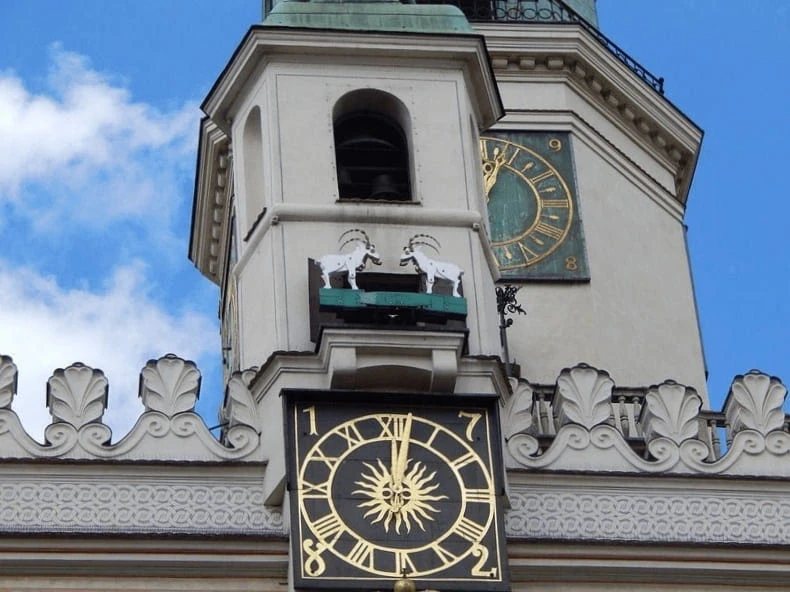
But the human spirit, like the phoenix, rises from the ashes with renewed vigor. The city fathers, determined to restore Poznań to its former glory, commissioned the construction of a new town hall—one even more splendid than the last. And to crown this architectural masterpiece, they engaged the services of Master Bartłomiej of Gubin, a clockmaker of legendary skill, to create a timepiece worthy of the city’s greatness. Such a clock was a luxury few cities could afford, but Poznań, in those days, was among the wealthiest and most powerful in all the land, and its councilors spared no expense.
To mark the unveiling of this magnificent clock, the city council decreed a grand feast—a banquet of such opulence that the nobility from every corner of the kingdom would be drawn to its tables. The preparations were immense, and the head cook labored day and night, his brow perpetually glistening with sweat, his voice hoarse from barking orders at his underlings. The pièce de résistance was to be a succulent venison roast—a haunch of deer, marinated in herbs and spices, turning slowly over an open flame until its aroma would make the very angels weep with envy.
The task of turning the spit fell to a young kitchen boy named Petrik, a lad of boundless curiosity and questionable attention span. He was instructed, with the sternest of warnings, to tend the roast with unwavering vigilance. But the boy’s mind was elsewhere—for that very morning, Master Bartłomiej himself had taken him aside and explained the wonders of his great clock: the intricate dance of gears and wheels, the gentle ticking of the escapement, the heavy weights that drove the mechanism with inexorable precision. Petrik’s imagination had been captured, and his duties at the spit seemed dull indeed beside the marvels of horology.
At last, the temptation proved too great. “Just one moment,” the boy told himself. “I shall steal but a single glance at the clock and the wonders of the market square. What harm could a few minutes do?”
Foolish boy! For in that moment of distraction, the venison roast slipped from its spit and tumbled into the flames, its fragrant juices hissing into smoke. Petrik stared in horror as his master’s masterpiece was reduced to a charred cinder.
But panic gave way to desperate inspiration. The boy dashed from the kitchen and raced to the nearby meadow where the townsfolk grazed their livestock. With all the strength his young arms could muster, he seized two bleating goats and dragged them, kicking and protesting, back to the town hall kitchen. The goats, sensing their peril, fought with frantic determination—and in their struggle, they broke free from the boy’s grip and bolted up the winding stairs of the tower.
There, upon the balcony, before the assembled dignitaries and noble guests, the terrified creatures began to butt heads with wild abandon. Their hooves clattered upon the stone, their horns clashed like swords, and their frantic bleating echoed across the square. Far from being scandalized, the guests—including the burgomaster, the voivode, and the entire company of nobles—burst into uproarious laughter. The spectacle was so entertaining, so utterly delightful, that all thoughts of punishment fled from their minds.
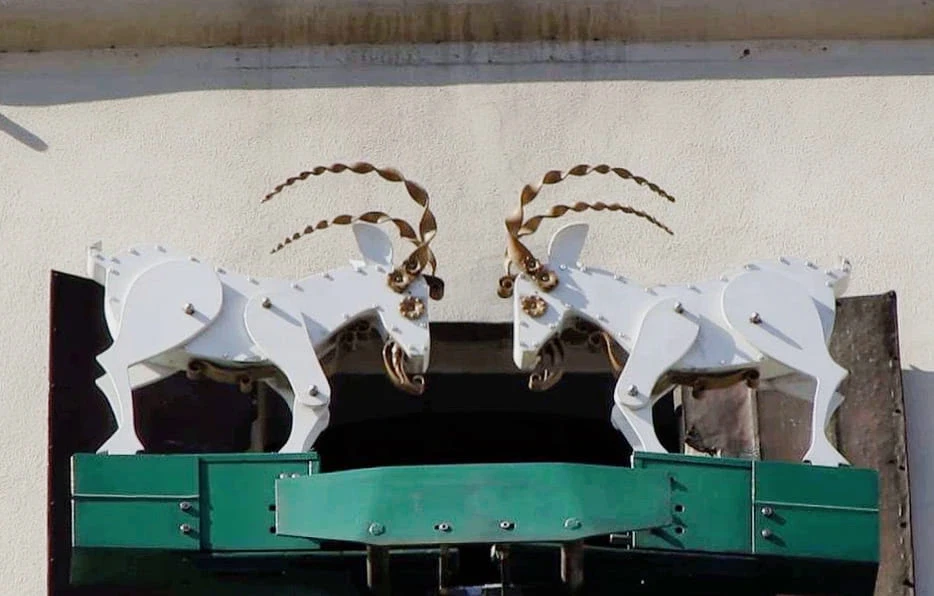
The burgomaster, wiping tears of mirth from his eyes, declared that the boy was forgiven. But he went further: he commanded the clockmaker to incorporate this charming scene into his great timepiece. Henceforth, every day at noon, when the clock struck the hour and the trumpeter sounded the city’s anthem, a pair of mechanical goats would emerge and repeat the fateful butting match that had so delighted the assembly.
And what of the real goats, you ask? Were they destined for the dinner table? Fear not—they were not sacrificed to the appetites of the councilors. The goats were retrieved from the tower, unharmed, and returned to their rightful owner, a poor widow whose livelihood depended upon them.
And so it is that to this day, the citizens of Poznań and visitors from around the world gather beneath the town hall tower at noon to witness the famous butting goats—a spectacle born from the folly of a curious boy, the misfortune of a lost roast, and the good humor of a city that knows how to find joy in the most unexpected of places.
Thus ends the legend of the Poznań Goats—a tale of laughter, forgiveness, and the enduring charm of a city that turned a kitchen disaster into a beloved tradition.