
King Augeas of Elis was immeasurably wealthy. His countless herds of cattle and sheep, along with vast troops of horses, grazed in the fertile valley of the Alpheus River. He owned three hundred snow-white steeds, two hundred red as copper, and twelve as radiant as swans—one of which bore a star gleaming upon its brow.
So prodigious were Augeas’ herds that his servants could never keep pace with mucking the stables. For years the filth piled high, until the dung reached the very rafters.
King Eurystheus, seeking both to curry favor with Augeas and humiliate Heracles, commanded the hero to cleanse the stables. Upon arriving in Elis, Heracles addressed the king:
“Grant me a tenth of your horses, and I shall purge these stables in a single day.”
Augeas laughed, for he deemed the task impossible. Yet he swore an oath:
“A tenth of my steeds shall be yours if you achieve this by nightfall.”
Heracles called for a shovel. Augeas, smirking, obliged.
“That shovel will serve you for many years!” scoffed the king.
“But one day,” replied Heracles, striding toward the Alpheus’ banks.
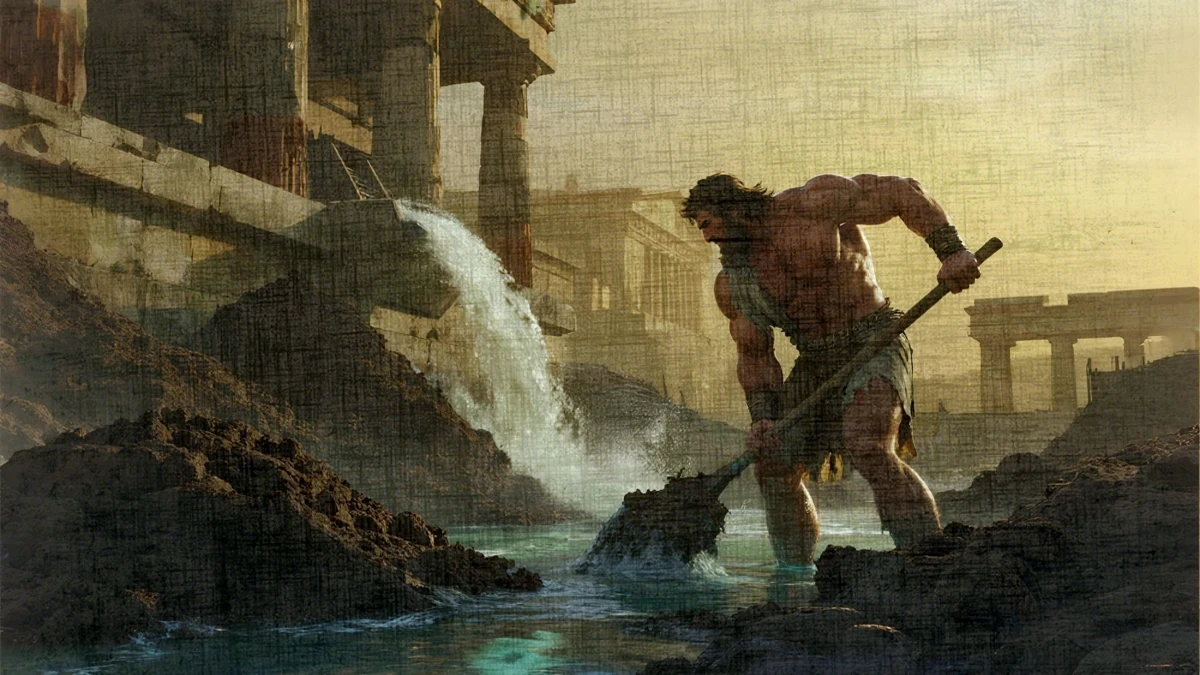
For half a day, he dug tirelessly. Earth flew from his shovel, forming towering embankments as he diverted the river’s course straight through the royal stables. The raging waters of the Alpheus surged through the stalls, sweeping away decades of filth, rotten troughs, and crumbling walls alike. Leaning on his shovel, Heracles watched the river do its work—intervening only occasionally. By sunset, the stables stood pristine.
“Forgive my thoroughness, King,” said Heracles. “I’ve purged not just the dung, but all decay within. Now honor your oath.”
But the avaricious Augeas reneged, hurling insults. Enraged, Heracles slew the king in single combat.